Quote of the week
“A smooth sea never made a skilled sailor.”
- Proverb

Edition 48 - November 30, 2025
“A smooth sea never made a skilled sailor.”
- Proverb
Google’s recent surge in AI performance has shifted the center of gravity in the industry. After a long stretch of incremental progress, they suddenly look like the company most likely to dominate the next one to two years. The gap is not just model quality. It is the speed at which they are shipping tools, the consistency of their research output, and the way they are integrating everything into a tight, coherent platform. Competitors are growing fast, but Google’s momentum feels different. It feels like an organization that finally unlocked its own capabilities and is now pushing them forward without friction. Incentives, architecture, and culture are lining up at the same moment.

You can see this most clearly in the tools that sit on top of their models. AI Studio compresses the entire lifecycle of building an AI product into something you can do in a few minutes. The interface is simple, but the underlying system is doing a surprising amount of work. It handles reasoning, memory, safety, versioning, and deployment without asking for much configuration. That is usually the part that slows teams down. Instead, everything stays inside one environment that feels more like a creative tool than a traditional development platform.

I recorded a short video showing what this looks like in practice. In it, I spin up a new app, test a few behaviors, and deploy it. The whole process takes less 5 minutes. This is what makes Google’s position so strong. They are not only raising model performance. They are reducing the cost of turning model performance into real products. When the tools erase friction, the number of people who can build useful software expands fast. Take a look at the app I built here. Check out the video below:
Picture a near future where most desk work hums quietly in the background. AI schedules meetings, drafts proposals, reconciles finances, and runs analysis while people perform only the small bits that require judgment. That shift creates an odd kind of silence in the workday. It also creates an abundance of cognitive slack that people have not experienced in decades. When the tools are good enough, the bottleneck is no longer productivity. It is in how people choose to fill the surplus.

Economic history shows this pattern. Each major wave of automation raised output while freeing attention, and society reliably funneled that attention toward entertainment. Radio and film expanded after industrial automation. Mobile video and social feeds exploded when smartphones compressed communication and lowered coordination costs. We are heading for the same pivot, only faster. As LLMs reach their practical limit in office work, companies will realize the next frontier is not squeezing another percent out of tasks. It is capturing the growing pool of human curiosity that sits on the other side of automation.

This is where the entertainment models will begin to outpace the productivity models. Video generation, real time worlds, and adaptive narratives will do for entertainment what LLMs did for text. The consumer surplus will be enormous because the cost of producing these experiences collapses while quality improves. The shift is not merely about leisure. It is a reallocation of cognitive energy. People reduce hours, not out of economic pressure but because productivity gains make those hours less necessary. That freed capacity moves into hobbies, personal exploration, and play, and entirely new job categories emerge around orchestrating AI first entertainment.
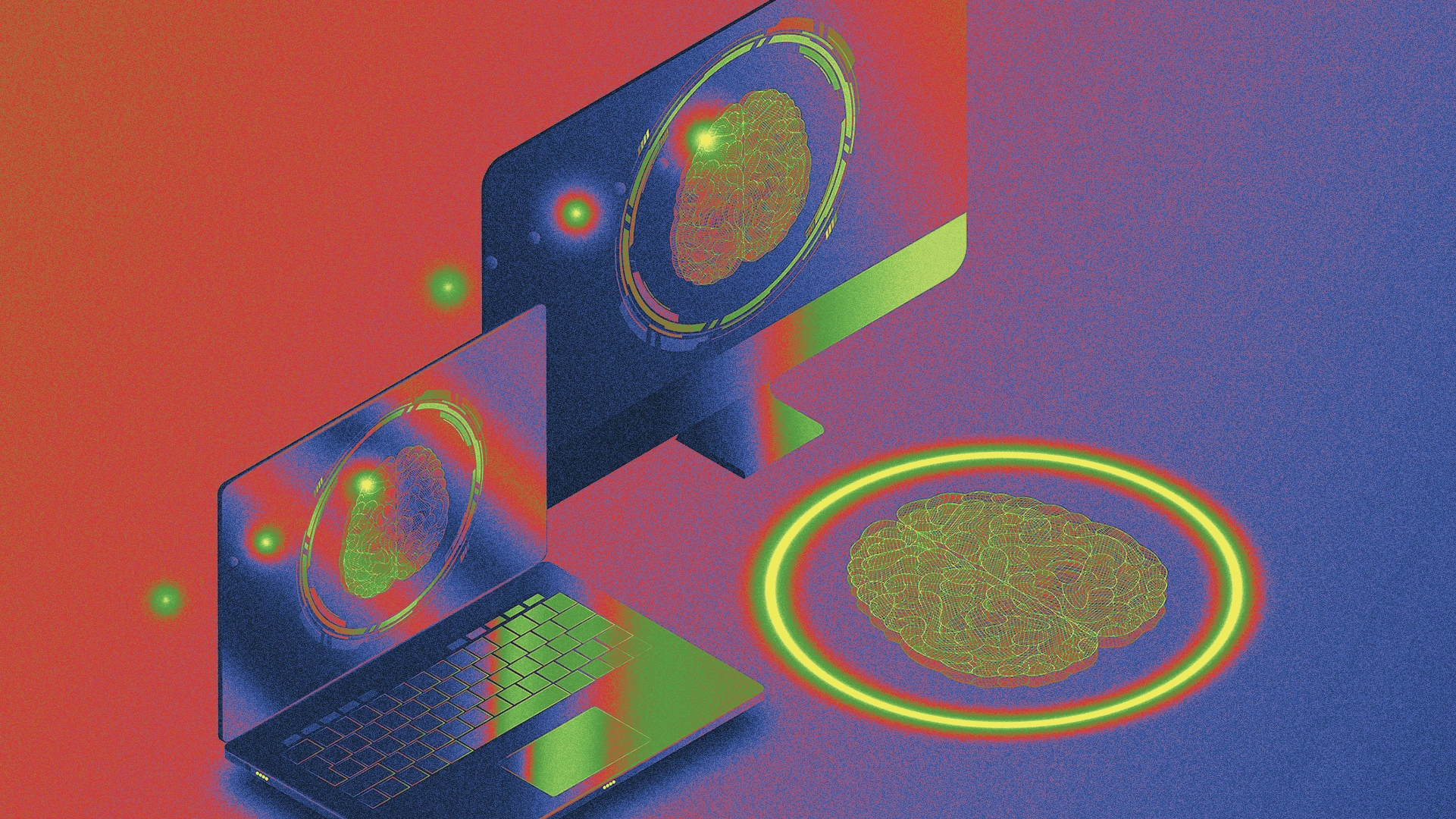
There is a disruptive side to this transition. When entertainment becomes hyper personalized, shared culture fragments further. Social media already pushed us in that direction, but AI accelerates the slope. People drift into micro worlds tailored to their preferences. The risk is not isolation as much as attention inflation, where experiences must intensify to feel rewarding. Yet this pressure also creates room for new skills. People invest less in rote knowledge and more in taste, curation, and the creative judgment needed to guide machines rather than compete with them.

The deeper prediction is that entertainment becomes the gravitational center of AI development. Productivity plateaus because there is only so much work worth optimizing. Entertainment rises because it absorbs the surplus energy released by automation and because the economic upside is larger than most expect. When the cost of creating entire worlds approaches zero, the value shifts to the minds choosing where to spend their time. That is the future most people are not preparing for, but it is coming quickly as AI finishes the boring work and leaves us with the far more interesting question of what to do next.

Antimatter sounds like pure science fiction, but it is a very real kind of stuff that physicists can make and store in tiny amounts. You can think of it as a mirror version of ordinary matter. For every familiar particle, like an electron or proton, there is an antiparticle with the same mass but opposite charge. When matter and antimatter meet, they annihilate and convert all of their mass into energy, following Einstein’s famous equation E = mc². That is why antimatter is so interesting for space travel. A small amount contains hundreds to thousands of times more usable energy per kilogram than chemical fuel or even nuclear fission, which is exactly what you want if you are trying to cross the solar system quickly or even reach nearby stars.
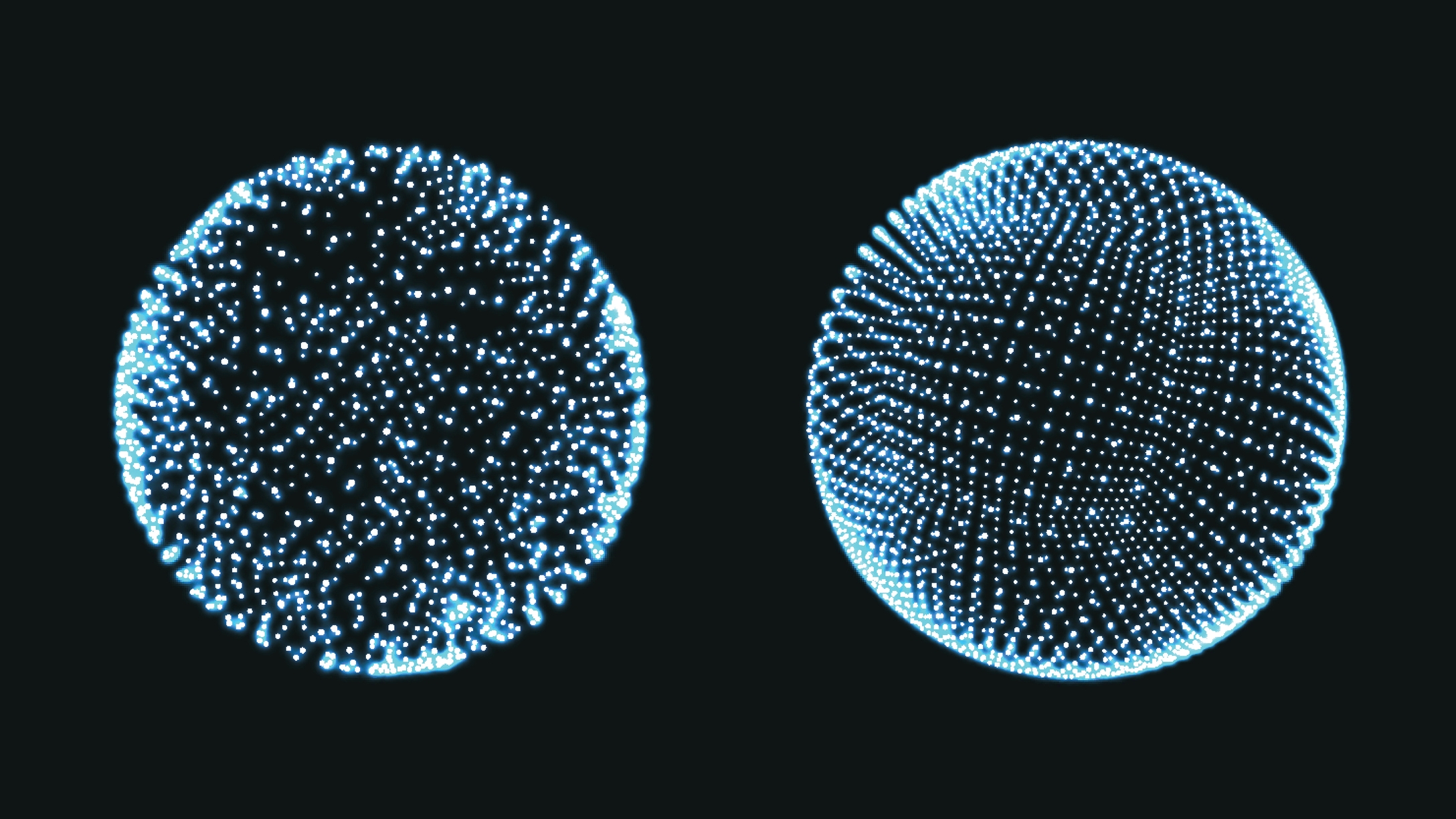
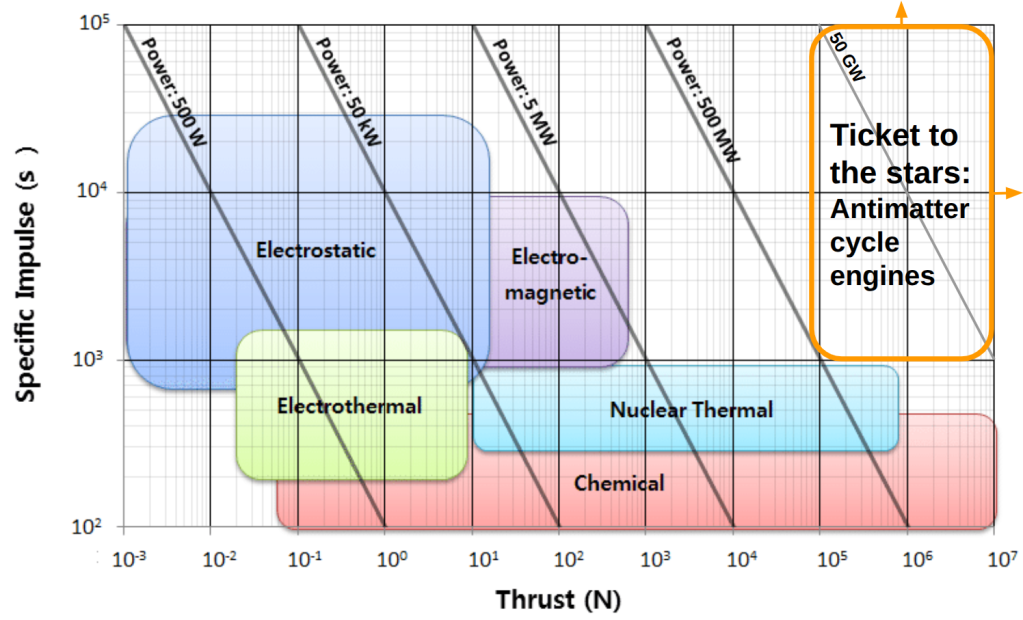
Casey Handmer’s proposal, laid out in his recent article, is to treat antimatter as an industrial energy product, the same way we once learned to mass produce aluminum. The idea is to use huge amounts of electrical power on Earth to make antiprotons in particle accelerators, combine them into antihydrogen, and store them in compact, carefully designed containers that could ride to space on rockets. Today, production is incredibly inefficient and slow, on the order of thousands of anti atoms per day and roughly a millionth of a percent efficiency, but there are early signs that efficiency can be improved by factors of several at a time. One striking calculation is that if the United States power grid ran flat out for a year and all that energy went into antimatter, the result would weigh only a few hundred kilograms, yet it would be enough energy to send many large spacecraft around the solar system or even toward nearby stars. Handmer argues that this is exactly the kind of long lead time technology that deserves a focused program similar in spirit to the Manhattan Project.
If antimatter is exotic fuel, dark matter is more like the invisible scaffolding of the universe. Antimatter is made of known particles and behaves like normal matter except for its charge, so we can create it in accelerators and trap it in lab equipment. Dark matter is different. It does not emit or absorb light, so we cannot see it directly, yet its gravity appears to hold galaxies together and shape the large scale structure of the cosmos. In simple terms, antimatter is ordinary matter turned inside out, while dark matter is an unknown kind of mass that seems to be there only through its gravitational pull. The two ideas meet in one important way. Many leading theories imagine dark matter as heavy particles that occasionally annihilate with each other and release gamma rays, just as antimatter annihilating with matter releases bursts of high energy radiation. That shared signature is what connects a rocket dream in one article to a deep space mystery in the other.
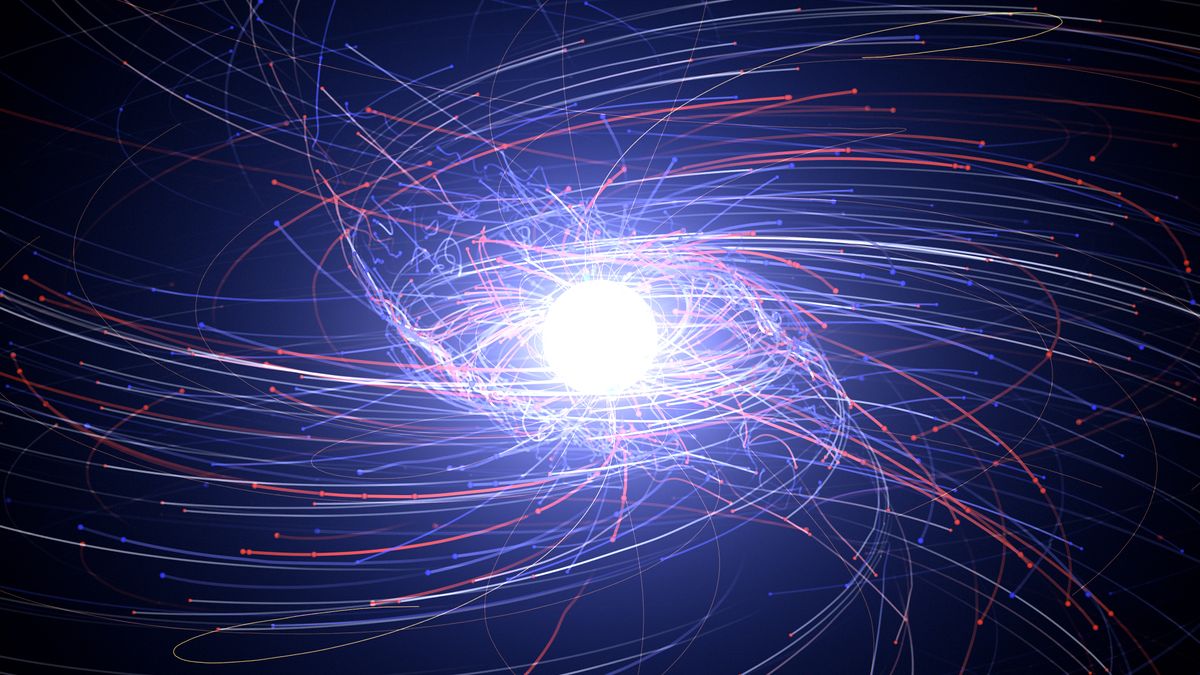
The new dark matter study, covered by The Guardian, focuses on those gamma rays. Nearly a century after astronomers first noticed that galaxies were spinning too fast for their visible mass, the simplest explanation is still that they sit in halos of dark matter that provide extra gravity. An astrophysicist at the University of Tokyo, Tomonori Totani, took data from NASA’s Fermi Gamma ray Space Telescope and looked for a pattern in the gamma ray sky around the center of the Milky Way. He found a signal whose shape closely follows what you would expect from a dark matter halo, and whose energy and intensity match one popular picture of dark matter as weakly interacting massive particles, or wimps, that are hundreds of times heavier than a proton. In that picture, when two dark matter particles collide, they annihilate and release gamma rays, much like tiny antimatter explosions happening in deep space.
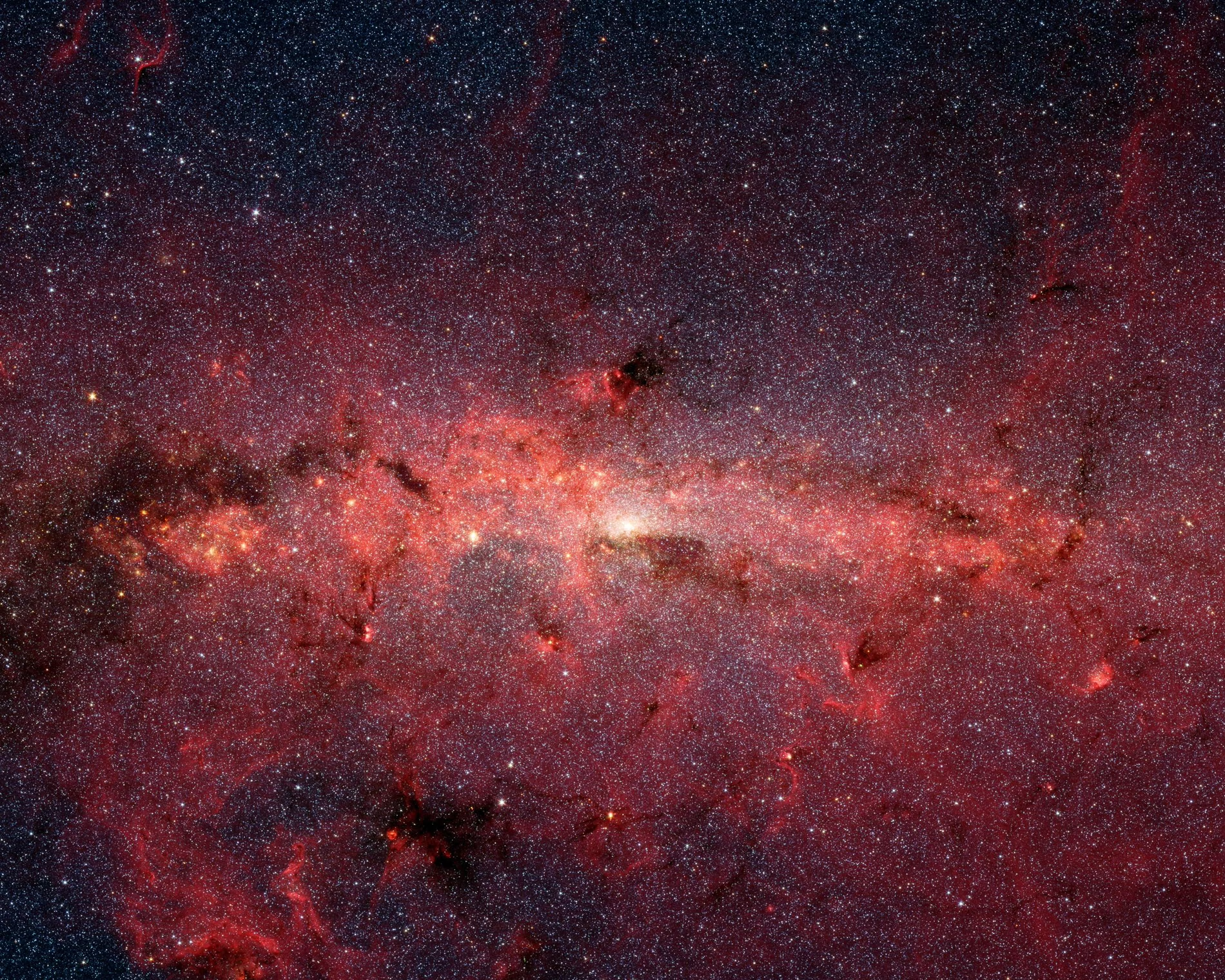
If this interpretation is correct, it would be the first direct evidence that dark matter is made of a specific type of particle rather than just an accounting trick in our equations. But the bar for that kind of claim is very high. Other astrophysicists point out that similar gamma ray signals can be produced by more ordinary processes, such as populations of faint astrophysical sources, and that the lack of matching signals from small nearby galaxies is a serious challenge to the dark matter explanation. For now, Totani’s result is best seen as a strong clue that motivates more precise measurements and cross checks. Taken together with Handmer’s antimatter roadmap, the two stories point in the same direction. We are learning not only how to read the invisible structures of the universe, but also how to turn the strangest ideas from particle physics into practical tools for exploration, from mapping dark halos in the sky to one day flying antimatter powered ships between the planets.
Doctors in Manchester have used gene therapy to stop the progression of Hunter syndrome in a three year old boy. The inherited disorder can cause severe physical and cognitive decline and is sometimes described as a form of childhood dementia. Children with the most serious cases rarely live past their teens. After just one year of treatment, the boy is showing normal development and no signs of the disease moving forward.

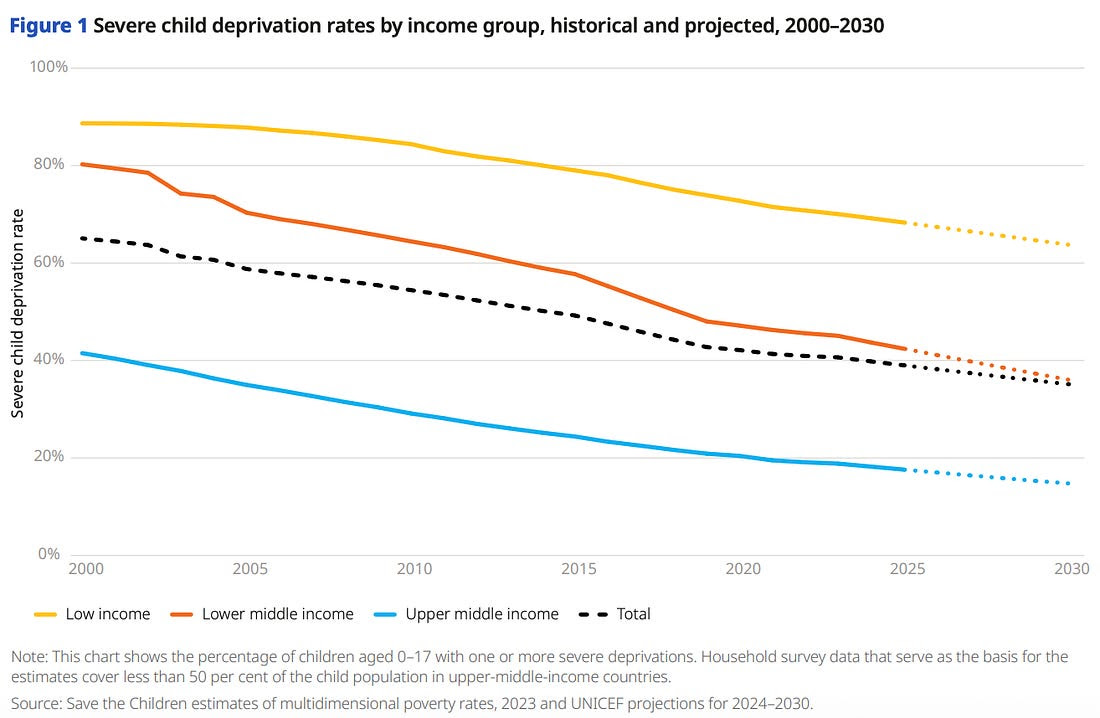
More than 95 million children have escaped extreme poverty since the start of the century. The number of children living in the harshest economic conditions fell from 507 million in 2000 to 412 million in 2024, even as the global child population grew by hundreds of millions. The countries that made the biggest gains all followed a similar playbook: they protected child rights through national budgets, expanded inclusive cash support, cut the cost of schooling and healthcare, and strengthened job security for caregivers.
T-cells are white blood cells that help the immune system find and destroy infected or cancerous cells. The catch is that T-cells can get exhausted. During long battles against chronic infections or growing tumours they sometimes slow their attacks, which is a built-in brake that prevents too much inflammation. Cancer has learned to take advantage of this by sending molecular signals that trigger exhaustion early. Researchers have now figured out how to block those signals, which keeps T-cells active and attacking tumours. The result is a boost for existing immunotherapy drugs and a stronger natural defence against cancer.
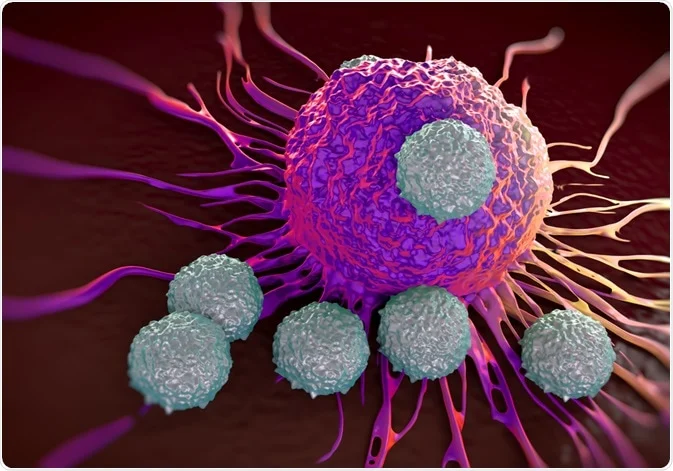
So far, the fact that these cells are injected back into the bloodstream means the therapies are mostly being used for blood cancers. Just last month, doctors at La Paz Hospital in Madrid reported early success treating children and teenagers with leukemia using what they called a living drug that fits on a spoon. Eight of the eleven patients reached remission long enough to receive curative transplants. Over time, this approach is likely to expand beyond blood cancers. The FDA took a major step in that direction last year when it approved the first TIL therapy for solid tumors.

Enjoying The Hillsberg Report? Share it with friends who might find it valuable!
Haven't signed up for the weekly notification?
Subscribe Now