Quote of the week
“If you do not change direction, you may end up where you are heading.”
- Lao Tzu

Edition 29 - July 20, 2025
“If you do not change direction, you may end up where you are heading.”
- Lao Tzu
OpenAI just unveiled ChatGPT Agent, a powerful new addition to the ChatGPT lineup. This agent can autonomously carry out multi-step tasks like planning trips, booking reservations, summarizing research, and even editing slides or spreadsheets. It combines tools like Operator and Deep Research into a single system that thinks, acts, and adapts — using its own virtual computer to interact with websites and apps on your behalf.

The use cases are wide-ranging. You can ask it to plan a Japanese breakfast next week and it'll find recipes, order ingredients, and schedule delivery. Or it can prepare for a meeting — gathering news, summarizing key points, creating a PowerPoint, and even integrating with your calendar. For developers, it can review pull requests, run code snippets, and post updates. It’s a personal assistant, researcher, coder, travel planner, all in one.

Be careful. This is much less secure than regular ChatGPT. DO NOT share personal details or sensitive data with it. It can interact with your inbox, browser, and files if you give it access. Mistakes can leak info fast. Treat this like a beta tool with potential, not a vault.
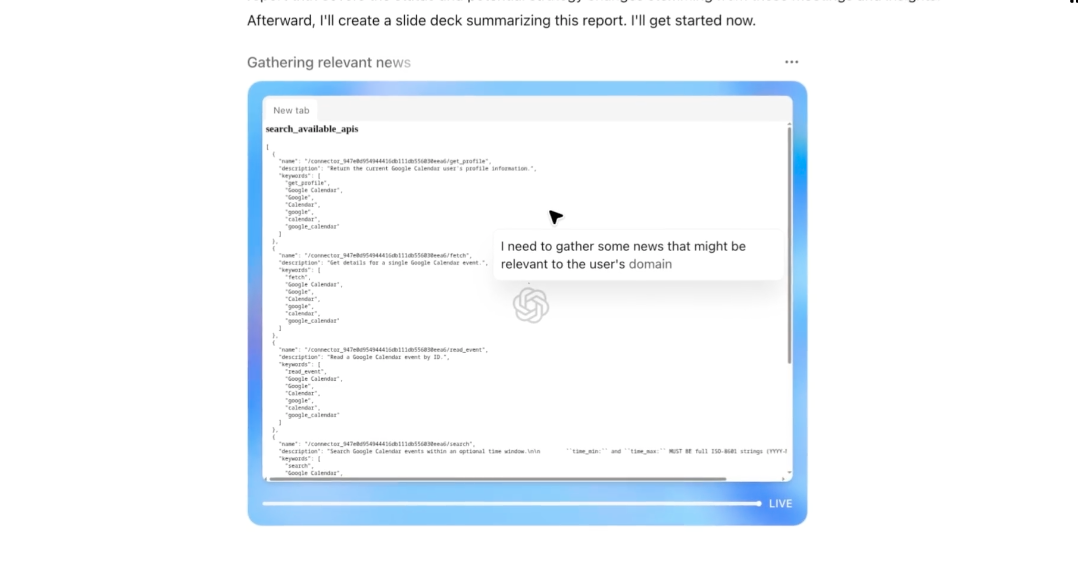
Behind the scenes, OpenAI trained ChatGPT Agent on their latest o3 model and integrated their existing tools — Operator for web browsing and Deep Research for multi-step reasoning. They added connectors for Gmail, GitHub, Google Drive, Slack, and more. They also built in safety checks: it pauses for confirmation on critical actions, monitors for prompt injections, and disables risky features like financial transactions by default. It’s rolling out now to Pro, Plus, and Team users, with Enterprise and Education access coming soon.
I covered the news a few weeks ago that OpenAI was in talks to acquire Windsurf for $3 billion. That deal fell apart — reportedly because Anthropic yanked Claude access and Microsoft wasn’t interested in carving out exceptions for OpenAI. Without Claude and with Microsoft protecting its turf, the whole thing collapsed just as the exclusivity window expired.
Google saw the opening and moved fast. They didn’t buy Windsurf outright but instead grabbed the key players — CEO Varun Mohan and cofounder Douglas Chen — and licensed the tech for less than OpenAI had offered. Windsurf’s leftovers were scooped up by Cognition, which at least made sure the rest of the team got paid and the platform survives in some form.
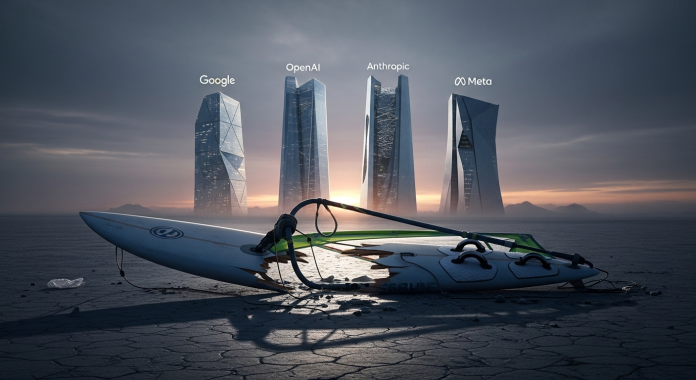
So yeah, Google won this round. They got the talent, the tech, and none of the regulatory headaches. OpenAI ended up with nothing, and Windsurf lost its leadership. The battlefield shifted quickly, and Google walked away with the prize.
But the war is far from over. OpenAI is gearing up to attack Google’s core businesses — search and browsers. The next few months will be wild. I was a kid during the dot-com frenzy, so I didn't really get to experience what I imagine was an exciting and rapidly-changing landscape. I can only imagine this has the same chaotic energy. The fun’s just getting started.
DARPA is experimenting with a new way to beam energy across vast distances using high-power lasers. The latest test involved shooting 10 kilowatts of power from the ground to a receiver mounted on a 500-meter tower. That might not sound like much, but the real goal is to scale this up — eventually delivering energy to remote locations, battlefields, or even spacecraft using directed light.
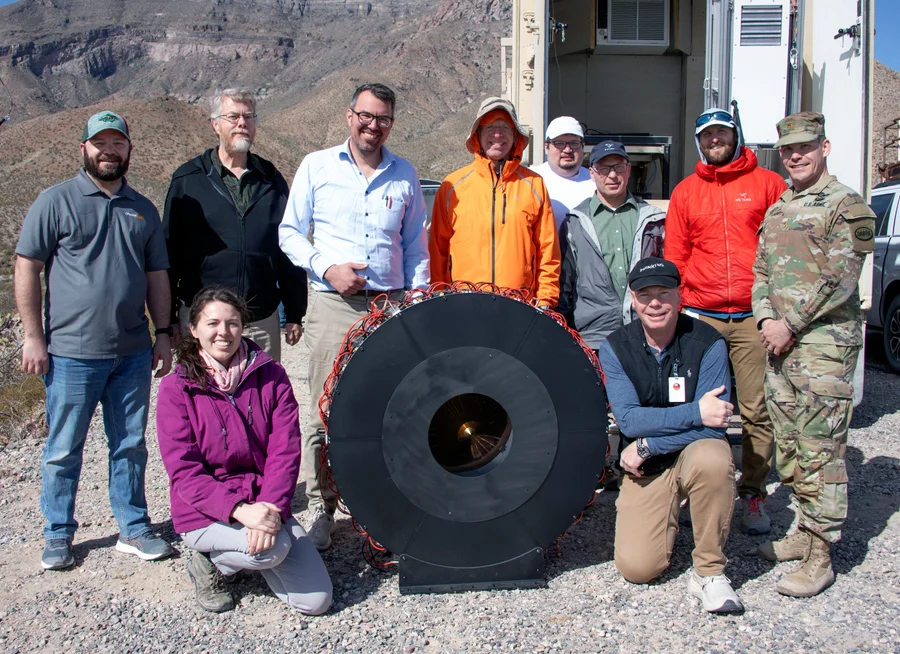
Unlike microwave beaming, which spreads out and loses efficiency, laser transmission offers pinpoint accuracy. DARPA’s demo showed that with adaptive optics and proper calibration, you can maintain a high-energy beam across long distances with minimal loss. While still early, the agency is now planning to push the tech into near-space and satellite-based applications. It’s a modern version of wireless power, and it opens the door to some big possibilities.
Here's the rant and I’ll keep saying it — America needs to massively increase how much energy it produces and distributes. Solar, hydro, wind (meh), natural gas (for as little time as possible) nuclear fission, nuclear fusion, and now maybe space lasers. We need to explore every avenue and move fast.

This laser tech is still in the prototype phase, but the roadmap is clear. Short term: power delivery to drones, military outposts, and remote areas. Long term: powering satellites, space stations, and maybe even lunar bases. If they can scale efficiency and safety, this could become a cornerstone of global and interplanetary power infrastructure.
GLP-1 drugs like Ozempic and Wegovy aren’t just reshaping the weight loss market — they’re causing waves in the life insurance world too. A growing number of people are using these drugs to lose significant weight and improve health markers. This makes them appear less risky to insurers, which in turn is breaking the traditional models that underwrite life policies. The industry isn’t sure how to handle it. Are the improvements permanent? Are they masking deeper risks? It's interesting to see fast-changing health inputs are disrupting an industry that usually moves at a glacial pace, one that I witnessed first-hand.

I don’t like to talk about myself unless I think it can help others. Reading about that brought me back to a strange chapter in my own story. I graduated from Penn State right at the beginning of COVID, with the job (and stock) market on fire in the worst way. One road I had was working for New York Life, which I quickly realized was not for me. Nevertheless, I got certified to sell life insurance in Pennsylvania. After my prodding questions regarding the value of whole life insurance versus term life and investing turned my manager sour, I kept looking. Finally I was contacted about a job at a small insurance tech company to work as a product configuration analyst.
Five years later, I’m thriving in Product Management — a field I didn’t even know existed back then. I stumbled into it during my time at that insurance tech company, while researching potential next steps in my early career. That research showed me the world behind the curtain, and I was hooked.

Since then, I’ve also worked at companies in HR tech and compliance tech. I’ve mentored aspiring PMs and been mentored by brilliant people with decades of wisdom. What changed my life was one decision: about nine months into my career, I decided to fall in love with learning. At first it was a forced necessity. Then it became a habit. Now it’s the engine that powers everything I do.
Google has made its Veo video generation model available through the Gemini API, allowing developers and creators to start building with some of its early capabilities. Veo can generate high-quality 1080p video clips from text prompts, complete with realistic motion, scene transitions, and cinematic effects. It’s positioned as part of Google’s push to democratize advanced AI video tools for everything from filmmakers to social media creators.

Believe it or not, all AI video generators are still pretty terrible. They’ve gotten good at simple things, and can even handle surprisingly complex physics. But the results still feel janky, inconsistent, and obviously fake. Most platforms limit you to 5–10 second clips, and that’s assuming you’re even allowed access — let alone willing to pay the premium pricing.

Before you dive in, I strongly recommend watching this breakdown by YouTuber Matt Wolfe. He goes over the strengths and weaknesses of the top video models in a no-nonsense way. It’ll save you a lot of time, money, and frustration — especially if you're thinking of paying for one of these tools.
At Shopify, AI adoption didn’t start with loud top-down mandates or flashy tools; it started with making AI feel accessible. This First Round article breaks down how the company launched its AI platform, Sidekick, and built a culture around experimentation and learning. Instead of forcing employees to use it, Shopify focused on lowering the friction. That meant integrating AI into workflows, building trust through transparency, and encouraging real usage by showing value.
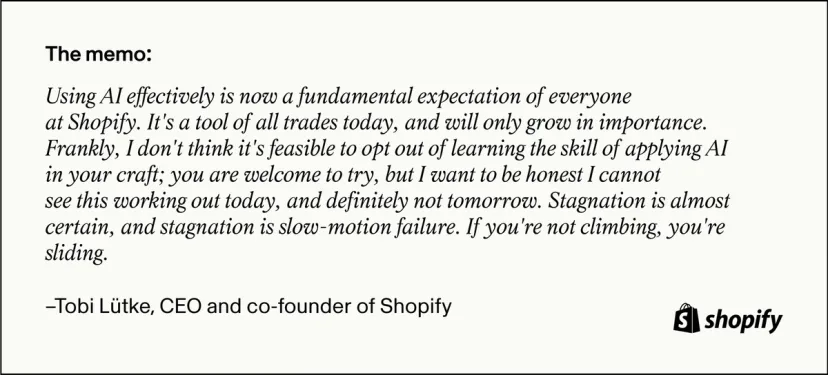
Shopify’s approach was intentionally human-first. They encouraged internal teams to document what worked, hosted regular “AI Hour” meetings for sharing, and made sure every employee — from marketing to engineering — felt empowered to test ideas. The goal wasn’t just tool usage. It was culture shift. One that made employees see AI as a co-pilot, not a threat to their job.
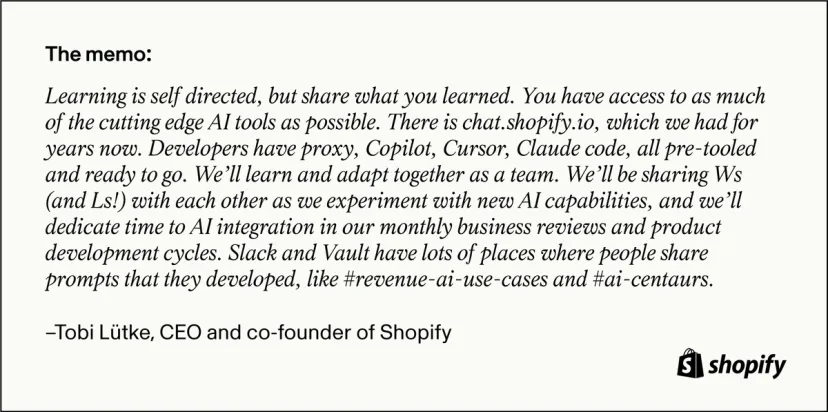
This is the right approach. If you’re a leader, just tell your team to start using AI. Don’t threaten. Don’t hover. Offer resources. Make it safe to test, to share, and to fail. Put someone in charge of centralizing learnings so your company isn’t repeating the same experiments in silos. Most importantly, don’t obsess over usage metrics. Measure the same performance metrics you always have.
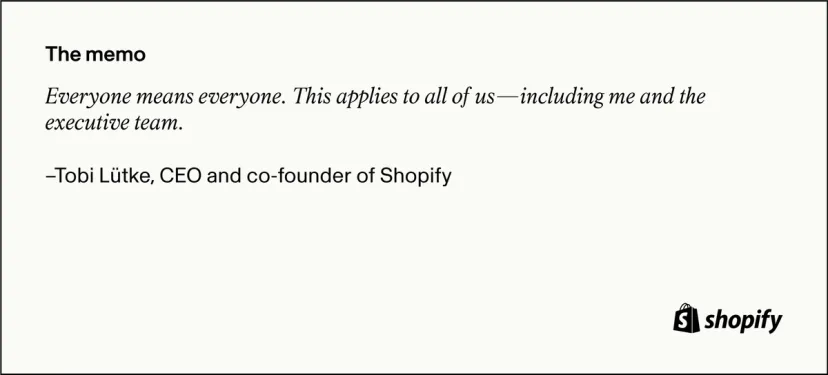
If someone is underperforming, odds are they’re either not using AI at all or they don’t have the skills to adapt. That’s not a technology problem. It’s a role alignment problem. Either help them find a better fit or let them go. But don’t let fear or inaction slow your company down. The AI era isn’t waiting.
Israeli scientists have developed a groundbreaking mRNA vaccine that provides full protection against pneumonic plague — a deadly form of the bubonic plague — in animal trials. Beyond this major breakthrough, the team hopes the same technology can be adapted to fight other life-threatening bacterial infections, opening the door to a new era of mRNA-based vaccines for diseases once thought unstoppable.

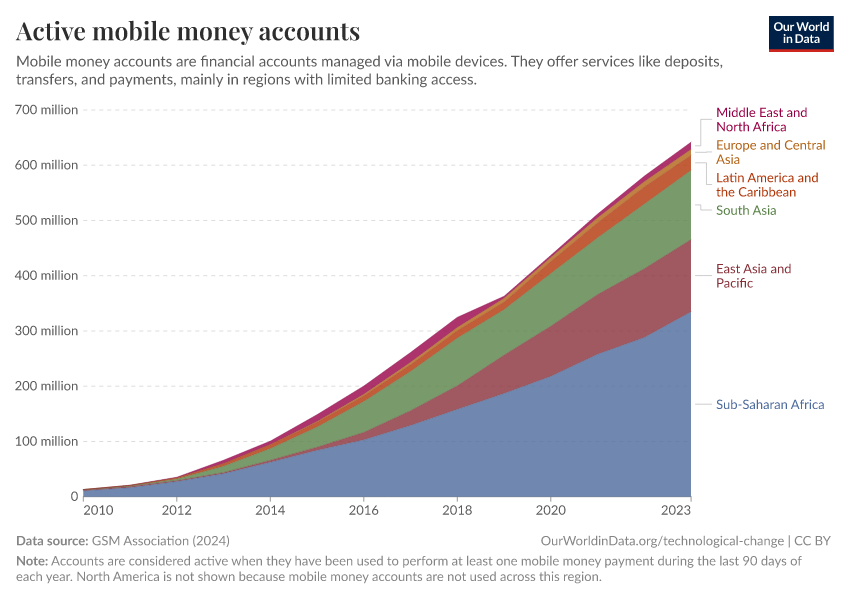
Sub-Saharan Africa is experiencing a financial revolution — without traditional banks. In just over a decade, mobile money accounts have surged from 10 million in 2010 to 640 million today, making up more than half of all mobile money accounts globally. It’s more than just convenience: this leap in financial access is transforming lives, enabling students to afford education and allowing migrants to send vital remittances home. The ability to move money by phone is quietly lifting millions out of poverty.
In a surprising twist, Amazon is partnering with SpaceX—yes, Elon Musk’s SpaceX—to launch satellites for Project Kuiper, Amazon’s broadband satellite constellation. The move comes after earlier delays with other launch providers, pushing Amazon to sign a deal with its direct competitor in the satellite internet space. The agreement will allow Amazon to launch some of its satellites aboard SpaceX’s Falcon 9 rockets starting mid-2025, accelerating its goal of deploying over 3,000 satellites to compete with Musk’s Starlink. Full article here.

Why would SpaceX help a rival? Simple. They’re running a business in the United States of America. SpaceX launches have become the gold standard — cheap, reliable, and frequent. If Amazon is willing to pay, SpaceX is happy to take their money. It’s not about feelings. It’s about being the best in orbit. Plus, launching Kuiper doesn’t make Starlink worse — it just means more business and more dominance for SpaceX in the launch market.
But it goes deeper. SpaceX tech is so far ahead it’s not even close. Just look at their latest updates — Starlink has rolled out faster speeds, better latency, and new ground station tech that lets users maintain connectivity even on the move. Read the breakdown here. Kuiper, on the other hand, is just getting started and hasn’t launched a full production satellite yet. SpaceX might actually want Kuiper to succeed — because a thriving space broadband market draws more investment, more regulation clarity, and more infrastructure buildout. That’s good for everyone in the long run, especially the company already at the top.
This post from Benn Stancil lays out the rise of “SaaS 2.0,” where the winners of the first wave of AI infrastructure are moving up the stack and competing directly with the companies built on top of them. Foundational model providers like OpenAI, Anthropic, and Google aren’t just offering APIs anymore — they’re doing complex consulting work and building full applications, from agents to analytics tools to chat-based productivity suites. In this world, model companies can leverage their data, compute access, and distribution power to launch SaaS products with a competitive advantage from day one. Full article here.
These companies are creating AI-native software that blends models with workflows, blurring the lines between platform and product. The risk? They end up competing with their own customers. But the opportunity is huge. Whoever owns the interface owns the user. And if you already own the model and the platform, that’s not a hard leap. The post suggests that the slow trickle of product launches we’ve seen so far might just be the beginning of a much bigger wave.
I used to think this shift was inevitable, but I expected it to hit hard and fast. Now it’s starting to look like a slow encroachment — one that could fundamentally reshape white-collar work. If these model providers keep automating more tasks alongside domain experts, we might not need as many domain experts. The optimistic pitch is that we’ll still have the same number of researchers or analysts, just working fewer hours. That sounds nice, but it’s not how companies operate in the current state of US capitalism. If we start with 10,000 researchers, it’s more likely for companies to end up keeping 1,000 of them and pocketing the labor cost savings. If that happens across all white collar jobs, shit might get really crazy.
Enjoying The Hillsberg Report? Share it with friends who might find it valuable!
Haven't signed up for the weekly notification?
Subscribe Now