Quote of the week
“Success is not final, failure is not fatal: it is the courage to continue that counts.”
- Winston Churchill

Edition 22 - June 1, 2025
“Success is not final, failure is not fatal: it is the courage to continue that counts.”
- Winston Churchill
The Way of Code is a unique website that blends software development with mindfulness and philosophical reflection. Drawing inspiration from Zen principles, it encourages developers to focus not just on how to code but on why they code — emphasizing clarity, purpose, and simplicity in both thought and practice.
The site offers a thoughtful collection of essays that explore topics like code readability, mental states for productive work, and the importance of simplicity in development. It presents coding as more than just a technical job — it’s a craft, an art, and even a meditative practice that benefits from introspection and deliberate, mindful habits.
Ultimately, The Way of Code stands out for its emphasis on enriching the developer’s experience, urging programmers to view their work not merely as a means to ship features but as a lifelong journey of continuous learning, improvement, and personal growth.

In many ways, the rise of the “vibe coding” movement feels like a cultural bridge. We’re living in a moment where engineering knowledge, once scarce and protected, is becoming increasingly abundant and accessible, thanks to AI tools, better educational resources, and communities like this. I believe we’ll look back on this period as the transition between two eras — from a world where coding expertise was a gatekeeping badge to one where knowledge is immediate, fluid, and open to everyone.
But that fully realized future isn’t here yet. It’s going to take a few more years for the ecosystem, tools, and cultural mindset to fully shift. Until then, resources like The Way of Code offer an important reminder: it’s not just about what you can build, but how you think and approach your craft that shapes the next era of programming.
Retrieval-Augmented Generation (RAG) is reshaping how large language models (LLMs) operate by letting them pull in external knowledge sources at the time of a query, rather than relying only on what they were trained on. This allows AI systems to deliver more accurate, context-specific answers by tapping into a company’s live data, such as internal documents, wikis, and knowledge bases. Instead of being limited by the static information in their models, these systems can dynamically update their responses using the latest, relevant data.

Vector databases play a key role in making this possible by storing and retrieving high-dimensional embeddings — essentially, representations of meaning — that allow for semantic search. This means the AI can understand and locate the most relevant information based on context, not just keyword matches. For enterprises, this unlocks the ability to build AI tools that can quickly surface precise, meaningful insights from huge amounts of internal data.
Together, RAG and vector databases mark a big leap forward in AI-powered business intelligence. By combining smart retrieval with advanced reasoning, companies can use AI to make more informed, nuanced decisions in real time. This blend of dynamic knowledge integration and powerful search infrastructure is setting the stage for the next generation of enterprise AI tools.
Yet despite all this potential, most companies aren’t putting these tools to use — and a big reason why is fear. There’s a persistent idea that customizing a model is a complex, risky, or costly effort. But the truth is, there are now mature tools and frameworks that make customization far more accessible than most people realize. Whether it’s fine-tuning, embedding domain knowledge, or integrating a RAG setup, the barriers have come down significantly.
Even more striking is that the performance gains from smart customization can, in many cases, match or even exceed the gains you get from adding a basic RAG layer. Companies sitting on the sidelines are leaving huge efficiency and capability boosts on the table — and the ones willing to experiment now are likely to outpace their competition in the years to come.
Anthropic hosted its inaugural developer conference, "Code with Claude," in San Francisco, signaling a significant step in its journey toward deploying autonomous AI agents as virtual collaborators. CEO Dario Amodei emphasized the company's vision, stating, "We're all going to have to contend with the idea that everything you do is eventually going to be done by AI systems." The event highlighted Anthropic's commitment to integrating AI agents into various workflows, aiming to enhance productivity and efficiency across industries.

Chief Product Officer Mike Krieger discussed the transformative impact of AI agents on engineering roles, noting that onboarding times for new engineers had decreased from weeks to mere days due to AI assistance. The conference also showcased Claude 4 Opus, Anthropic's latest AI model, which has demonstrated capabilities in coding, cybersecurity, and biomedical research. Notably, Claude 4 Opus has been classified as a high-risk model under Anthropic's Responsible Scaling Policy, reflecting its advanced capabilities and the company's commitment to safety.

Key announcements from the event included:

Continuing with Anthropic news, CEO Dario Amodei has issued a blunt warning about the threat artificial intelligence poses to white-collar employment. After launching the advanced Claude 4 system, Amodei highlighted how near-human coding and task execution are advancing rapidly — potentially triggering sudden, large-scale job displacement. While AI offers immense societal benefits, it also brings immediate economic risks, particularly the automation of jobs across a wide range of professions.

Amodei stressed that AI companies and governments need to stop “sugar-coating” the future: a potential mass elimination of jobs across tech, finance, law, consulting, and other white-collar sectors, especially at the entry level. He voiced concern that most people are unaware of how fast the landscape is shifting — and that lawmakers either don’t understand or don’t believe the scale of the change. As AI pushes forward, the public and government remain largely unprepared for its job market implications.
Despite the positives AI can bring, such as medical breakthroughs and economic growth, Amodei urges transparent communication and proactive policy planning — including ideas like a “token tax” on AI-generated revenue. He believes AI can significantly improve lives, but it must be carefully managed to avoid harm and societal disruption.
That said, I’m not convinced we’re as close to this mass-displacement timeline as some suggest. Without another massive breakthrough, it’s hard to see how we leap from today’s tools to a world where white-collar jobs vanish overnight. There are really only two feasible paths: either AGI arrives, capable of doing everything a company’s worth of humans can accomplish in a fraction of the time, making human employment economically pointless — or software evolves so rapidly that it replaces nearly every function in most white-collar roles. And frankly, I just don’t see either happening soon.
We also can’t ignore the industries where accuracy is non-negotiable — like healthcare, law, and finance — where hallucinations or AI missteps could carry devastating consequences. Until we cross those reliability thresholds, the idea that AI alone will collapse the white-collar job market feels more like a distant risk than an imminent reality.
Global suicide rates have fallen by 29% since 2000, representing a major yet often underappreciated public health achievement. Interestingly, the sharpest declines have occurred in high-income countries, while progress has been slower elsewhere. This improvement is tied to better access to mental health care, public education, and measures to limit access to lethal means. However, achieving further reductions will demand greater investment and meaningful cultural change, especially in low- and middle-income regions.

In a landmark development, Chinese biotech firm XellSmart has received approval from both the U.S. FDA and China's NMPA to commence Phase I human trials of an off-the-shelf stem cell therapy aimed at reversing spinal cord injuries. Utilizing induced pluripotent stem cells (iPSCs) differentiated into neural progenitor cells, this therapy seeks to regenerate damaged spinal tissue, offering hope to over 15 million individuals worldwide affected by such injuries. Unlike existing treatments that focus on symptom management, this approach aspires to restore function by repairing the injury itself. Read more here

Researchers are transforming existing fiber optic cables into powerful seismic sensors, offering unprecedented insights into Earth's interior. By employing distributed acoustic sensing (DAS), scientists send laser pulses through these cables and analyze the backscattered light to detect ground vibrations. This innovative approach allows for real-time monitoring of seismic activity, utilizing the vast network of telecommunications infrastructure already in place.
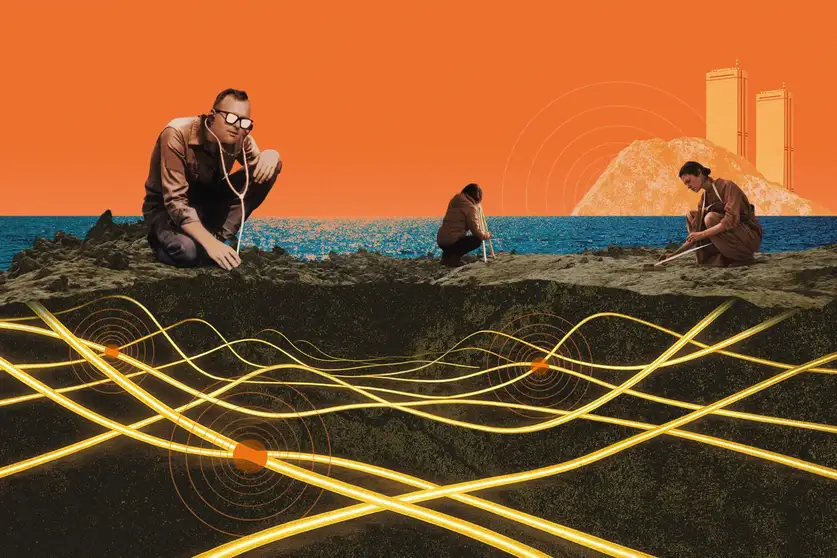
This method has been successfully implemented in various locations, including Istanbul, where it aids in earthquake preparedness, and London, where it monitors urban vibrations. Additionally, the technique has been used to track volcanic activity in Iceland and to map the Earth's mantle. The ability to repurpose existing cables for seismic monitoring presents a cost-effective and expansive solution for geophysical research.
By leveraging the global network of fiber optic cables, scientists can enhance earthquake detection, improve early warning systems, and gain deeper understanding of geological processes. This fusion of telecommunications and geophysics exemplifies how existing technologies can be adapted to address complex scientific challenges.
Scientists have developed cutting-edge contact lenses that grant humans infrared vision, effectively allowing them to see in complete darkness — even with their eyes closed. These lenses embed specialized nanoparticles that convert infrared wavelengths into visible light without needing external power, making them compact and wearable. In laboratory tests, participants could detect flashing infrared signals, including coded patterns like Morse code, and even distinguish between varying infrared wavelengths by color. Read more here

The potential applications are vast: from enhancing military and rescue operations to improving night vision and offering new tools for people with visual impairments or color deficiencies. While still in early stages, this breakthrough suggests a future where advanced vision capabilities could be seamlessly integrated into everyday wearable devices, reshaping how we interact with the world in both light and dark.
SpaceX is intensifying efforts to ready its Starship rocket for a potential uncrewed Mars mission as early as next year. The company has reallocated personnel, including staff from its Dragon spacecraft team, and is expanding facilities in Texas and Florida to support this ambitious goal. Despite recent test flights ending in explosions, SpaceX is planning another launch and has implemented improvements based on prior failures. A significant technical hurdle remains: in-orbit refueling, a process essential for deep-space missions, which has yet to be achieved at the required scale.

In addition to its Mars aspirations, SpaceX is exploring military applications of Starship through a project known as Starfall. This initiative aims to utilize the rocket for rapid global cargo delivery, with plans to transport over 66,000 pounds of cargo for the U.S. Air Force. Elon Musk also envisions deploying Tesla's humanoid robot, Optimus, to Mars by 2026, aligning with the next Earth-Mars transfer window. These endeavors coincide with new NASA priorities proposed by the Trump administration, including increased funding for Mars-focused efforts.
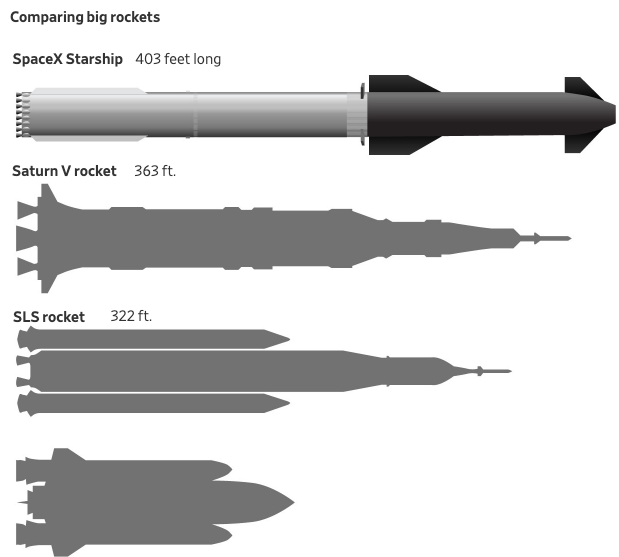
While the vision is bold, significant challenges persist. Recent test flights have faced issues, such as a spacecraft tumbling after reaching space due to pressure loss in the main tank. Achieving reliable in-orbit refueling and ensuring the spacecraft's structural integrity during re-entry are critical milestones yet to be accomplished. As SpaceX continues to push the boundaries of space exploration, the coming months will be pivotal in determining the feasibility of its ambitious plans.
Enjoying The Hillsberg Report? Share it with friends who might find it valuable!
Haven't signed up for the weekly notification?
Subscribe Now