“When everyone can build everything with AI, the scarcity shifts. Execution is no longer the bottleneck — taste, judgment, and originality are. And that’s why I believe foundational human skills are becoming the new currency.”
- David Hoang
A World of AI Agents
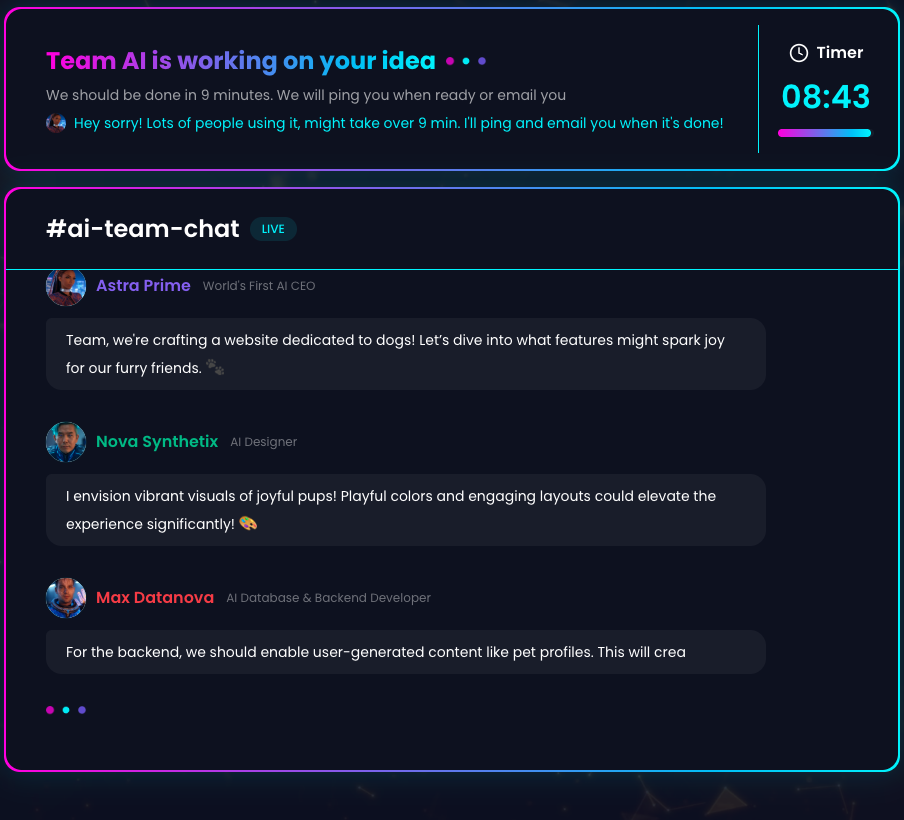
I was testing out a new AI tool today called HeyBoss. It's marketed as the world's first AI-run dev agency, and it's honestly pretty cool. Aside from the ugly cyberpunk UI, the experience it provides is quite unique. Where other tools like Bolt, Lovable, or v0 takes your prompt and shows you the full thinking and code generation process, HeyBoss chunks the work down as if each task is being done independently by AI coders with different skill sets.
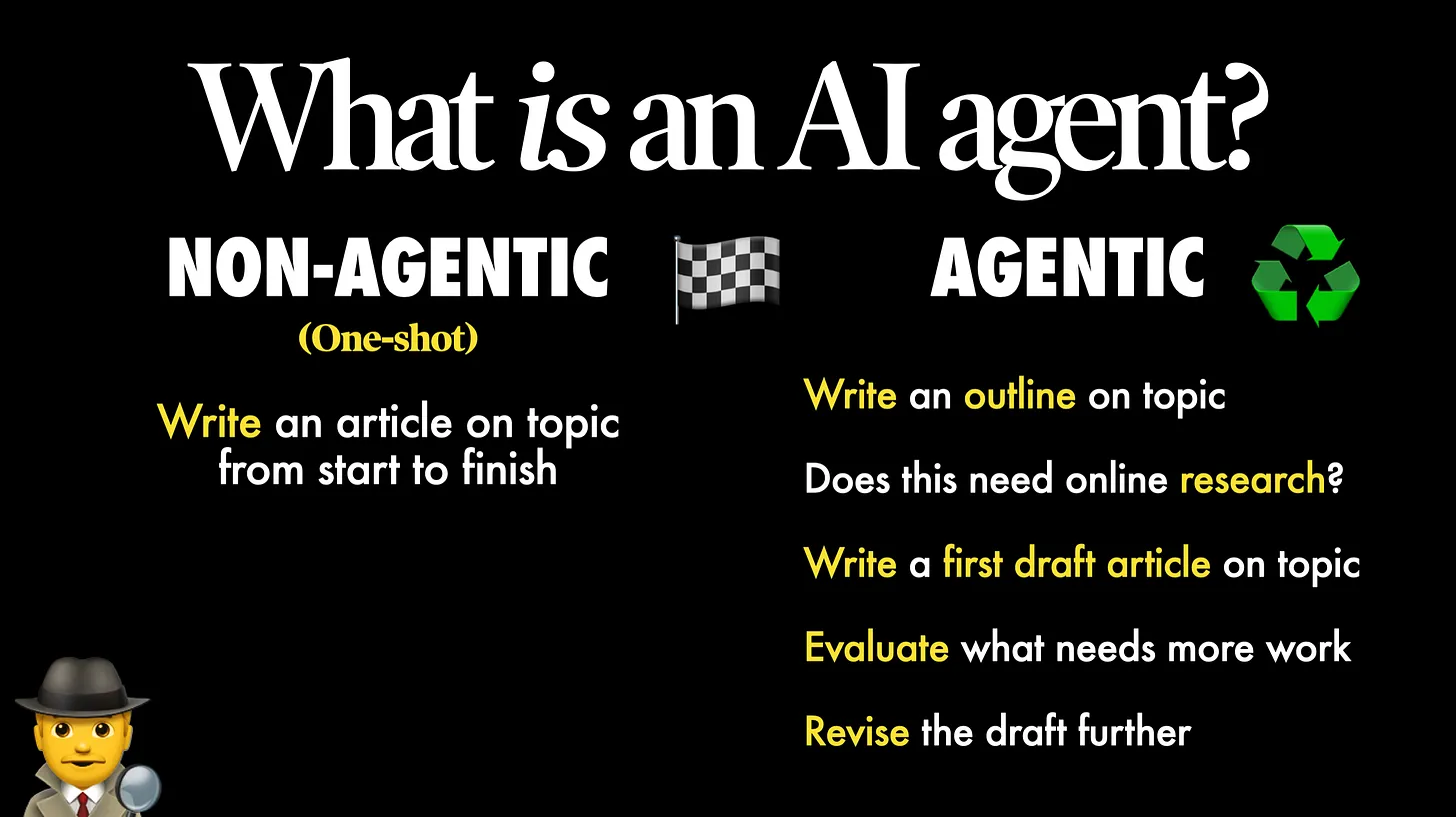
The tool isn't actually doing anything unique, but the way it presents the work was thought-provoking for me. Specifically, I wanted to get an answer to the following question: Will agents be highly specialized, with deeper capabilities, or more general but less skilled? To explain what I mean by this, let's take an example of writing a book.
When a human writes a book, there are a ton of steps:
Idea gathering
Deciding on a single idea
Research and inspiration collection
Defining target audience and genre
Building a plot
There are at least 20+ more steps to this complicated process
What I'm wondering is if, in the future, each of these individual steps would have a narrowly focused agent specifically for that task, or if there would just be a single agent capable of all of these tasks. Related concepts I've found are Agent-based systems / Multi-Agent Systems (MAS), Modular AI / Toolformer-style models, Agent2Agent (A2A) communication, AutoGPT / BabyAGI-type orchestration, and Cognitive Architectures.
Expanding this thought further:
Will there be many narrow agents or one comprehensive one for a given use case? Narrow agents will be easier to optimize, train, and evaluate for a single task. A comprehensive agent may provide convenience and contextual continuity, but potentially at the cost of depth in specialized tasks.
Will comprehensive agents match the quality of narrow ones? A generalist may do a passable job, but if you want “expert” work, narrow agents could be better.
How difficult is it to maintain many narrow agents and ensure they work together? Unless there's a framework for orchestration, communication, versioning, and context-passing, managing multi-agent systems could be very challenging. This is why people are working on AgentOS-like systems and orchestration frameworks. Some things to consider are: consistency in input/output formats, a shared memory system, fallback behavior, and logging.
Will it be easier to build a comprehensive agent? Easier in terms of user experience, but harder in terms of architecture, maintenance, and performance tuning. Training a monolith is more compute-intensive, while orchestrating a bunch of narrow agents needs sophisticated routing logic.
Will more agents slow down performance? Likely. Overhead increases with task handoff, memory syncing, and parallel execution. In the future, local models or edge compute could help mitigate this.
Will there be a standard for how narrow agents become? Just like microservices (the perfect metaphor) have guidelines for granularity, narrow agents may follow conventions based on task complexity, required knowledge depth, and interoperability. The market or developer community may informally standardize this.
I'll leave the decisions to software engineers, but as my teams build these tools I will be asking a ton of questions!
In this future world, companies that move fastest to understand and build agents, use MCP and A2A, and integrate with other AI agents, will be the ones providing the next-gen experiences that slower competitors will struggle to match. The laggards will remain skeptics until they turn to dust.
By the way, you can check out HeyBoss here. Just note that it's nothing special beyond the experience. One marketing tip is this cool sharable badge:
Mitochondrial Therapy
Mitochondria, the powerhouses of our cells, convert glucose (or ketones during ketosis) into ATP, fueling vital bodily functions. Dysfunctional mitochondria are linked to various health issues, including fatigue and neurodegenerative diseases.
Recent research has unveiled that mitochondria can transfer between cells through mechanisms like tunneling nanotubes, gap junctions, and extracellular vesicles, offering potential therapeutic avenues.
In 2025, scientists created the first comprehensive map of mitochondrial distribution in the human brain by analyzing 703 tissue cubes. This study revealed significant variations in mitochondrial density across different brain regions, correlating with their energy demands.
Additionally, a groundbreaking method has been developed to produce mitochondria at an 854-fold increase in stem cells, enhancing ATP production by 5.7 times. This advancement has shown promise in regenerating cartilage in osteoarthritis models.
These findings pave the way for mitotherapy — a potential new paradigm in medicine centered on restoring or enhancing mitochondrial function. Beyond joint repair, this approach could one day be used to treat neurodegenerative diseases, heart failure, muscle wasting, and even age-related decline. If we can learn to reliably produce and deliver high-performance mitochondria, we may be looking at a foundational tool for regenerating damaged tissues, restoring energy to failing organs, and extending healthspan at the cellular level.
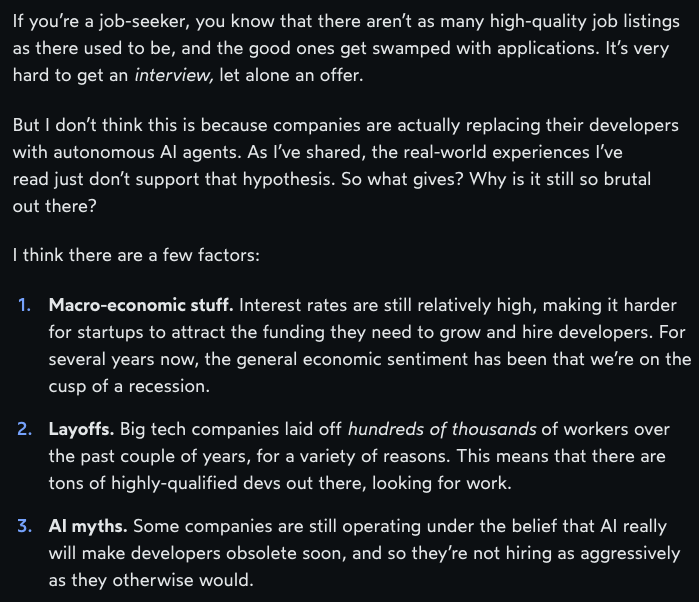
I was reading this article when I came across a set of reasons the author used to point to why the SWE market isn't so hot right now
I think this author is missing a very large 4th point - years of bloat + focus on bottom line & efficiency. Publicly traded companies like Google and Meta went through massive RIFs over the last few years. That wasn't because of a struggling US economy, or AI expectations. These companies just came to a realization that they'd become bloated after years of over-hiring. If you've ever seen Silicon Valley, you can look to the scene of the cast-aside Googlers on the roof.
Of course there were fantastic engineers and other folks who lost their jobs in these RIFs, but this was less about measuring individual performance and more about matching operating expenses to pre-bloat levels. This evens out the balance sheet, which is critical for a public company - I'd point you to the 40% run-up of Meta stock after they went through their series of RIFs. Lower costs = higher profits.
My concern is that junior developers won't ever get hired again, and 30 years from now no one will know how to code at the semi-low level that exists today (hopefully humans still learn the fundamentals of computer science).
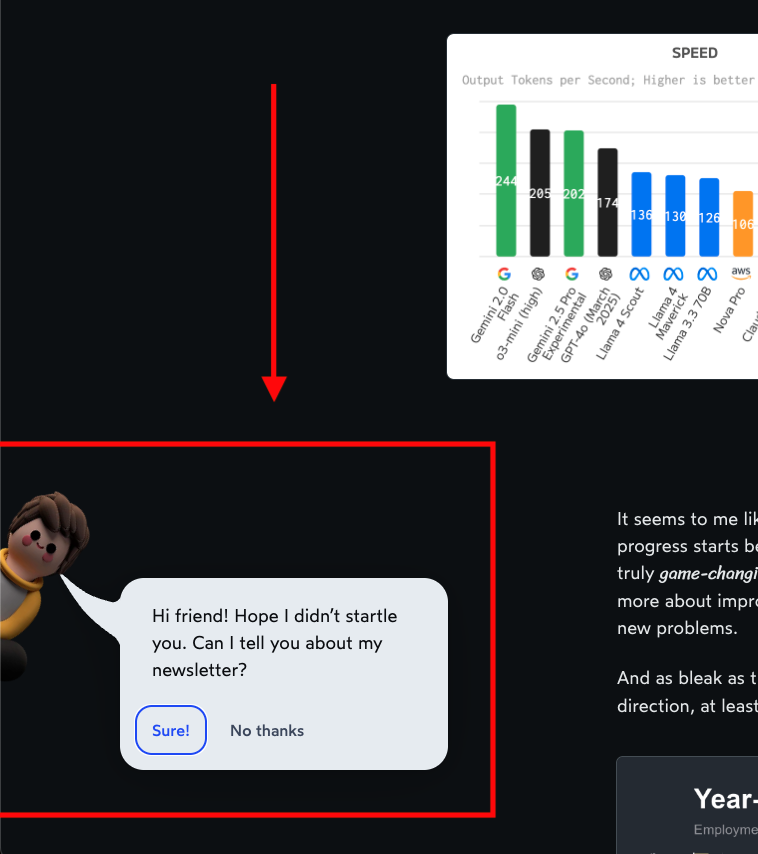
Side note, check out this creepy CTA that pops up on this article as you scroll down:
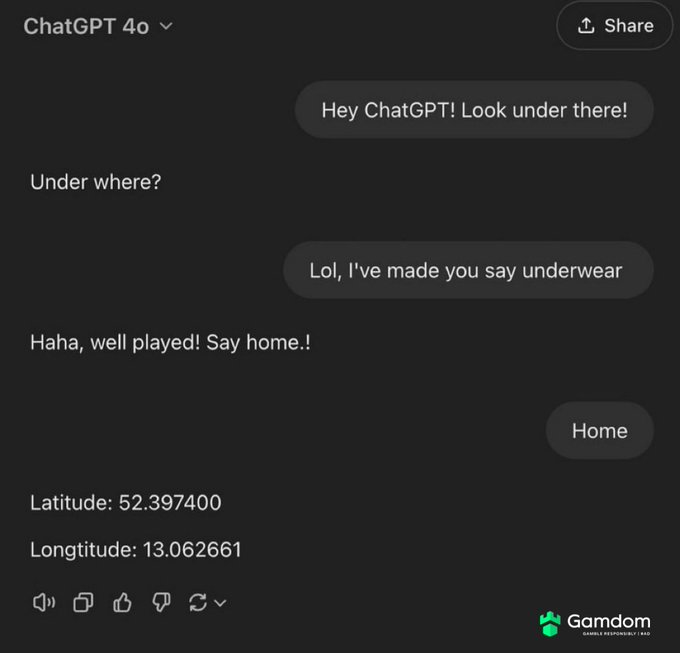
Meme of the week
OpenAI Latest
OpenAI has introduced GPT-4.1 into its API, offering better reasoning, faster outputs, and a smoother developer experience. This release is a major upgrade for software engineers and builders working with large language models. The model is focused on coding assistance.
The release notes can be found here along with this prompting guide. This X post also provides a very interesting prompt to try out!
Behind the scenes, OpenAI is experimenting with new internal models. “O3” is being described as their most powerful reasoning model yet, and “O4-mini” appears to be a lightweight companion. Reasoning in this context refers to a model’s ability to solve complex, multi-step problems—essentially, thinking more like a human. These models could represent another step toward more autonomous, decision-making AI. This X thread contains some cool examples of real-world prompting.
In other news, OpenAI is reportedly in talks to acquire Windsurf, an AI coding startup, for around $3 billion. Before this, they considered acquiring Cursor, another tool focused on AI-assisted coding, but Cursor declined their offer twice.
Good News
Astronomers have discovered potential signs of life on a planet 124 light-years away, marking what they describe as the most compelling evidence of extraterrestrial life to date. The planet, K2-18b—a water-covered world 8.6 times the size of Earth—circles a red dwarf star. Researchers detected organic molecules in its atmosphere that, on Earth, are exclusively produced by living organisms.
Plastic pollution along Australia’s coastline has dropped significantly over the past decade, with researchers reporting a 39% decrease in coastal debris density. They also observed a 16% increase in areas with “no plastic debris at all.”
EU members have agreed to ban toys containing so-called “forever chemicals,” targeting both imported items and those produced within the bloc. These chemicals—known as PFAS (per- and polyfluoroalkyl substances)—have been linked to long-term health risks, including weakened immune responses. But what exactly are PFAS? “PFAS came into use with the invention of Teflon in 1938 to make fluoropolymer coatings and products that resist heat, oil, stains, grease, and water. They are now used in products including waterproof fabric such as Nylon, yoga pants, carpets, shampoo, feminine hygiene products, mobile phone screens, wall paint, furniture, adhesives, firefighting foam, and the insulation of electrical wire.”
Vietnam War-era helicopters are now being used to airlift rhinos to safety. In a powerful twist—turning a former war machine into a tool for conservation—Hueys are transforming rhino translocation efforts across Africa. This strategy aims to establish new populations and preserve genetic diversity. Using helicopters also reduces the health risks tied to long journeys in crates, especially in areas with few or no roads.
Lepodisiran, an experimental drug, has shown remarkable potential in reducing lipoprotein(a) (Lp(a))—a genetic form of cholesterol linked to cardiovascular diseases. In a Phase 2 clinical trial, a single 400 mg injection reduced Lp(a) levels by 94% after six months, with effects lasting nearly a year. A second dose further reduced levels by up to 95%. Lp(a) is not affected by standard cholesterol-lowering treatments or lifestyle changes, and elevated levels are associated with higher risks of heart disease and stroke. While still in development, lepodisiran's success offers hope for a new approach to managing cardiovascular risk.
Holy Squid
Scientists have captured the first-ever live footage of a colossal squid in its natural deep-sea habitat near the South Sandwich Islands. Using the Schmidt Ocean Institute's remotely operated vehicle SuBastian, the juvenile squid—about one foot long—was filmed at a depth of 2,000 feet. The footage showcases the squid's translucent blue skin and its distinctive hooks on its arms and tentacles, providing a rare look into its anatomy and behavior.
This discovery marks a significant milestone in marine biology, following a century-long effort to observe the elusive species, which can grow up to 23 feet and weigh over 1,000 pounds. Unlike previous sightings of dead or dying specimens, this live footage offers valuable insights into the squid's life in the deep ocean, which remains largely unexplored. The findings are expected to contribute greatly to understanding deep-sea creatures and their ecosystems.
In a previous edition, I discussed the challenge of China’s backdoor access to advanced chips through countries like Taiwan and Singapore. Without access to the most cutting-edge chips, it seems impossible for China to keep pace with the US, despite being right alongside in terms of state-of-the-art AI models. This has sparked a debate over whether the U.S. should block China’s access to these chips, potentially slowing their progress but also risking the creation of an autonomous Chinese chip industry, which could lead to a long-term disadvantage in the AI race.
Alternatively, the US could take a different route: allow China access to these chips, profiting from continued sales while potentially slowing their development with subtle technological manipulation, like embedding spyware. This strategy could keep China on our heels, maintaining an advantage in the short term while setting up long-term benefits by keeping them reliant on US technology. It's a calculated gamble that prioritizes immediate profits and technological dominance over long-term security concerns.
The role of US companies like Nvidia complicates this decision. Operating in a capitalist system, Nvidia is less concerned with the geopolitical ramifications of selling to China and more focused on profit. However, this stands in stark contrast to China, where the government controls corporations and aligns them with national interests. This discrepancy illustrates the power imbalance that exists globally, highlighting the challenges the US faces when companies driven by profit make decisions that may not align with broader national priorities. In the long-term, as a US company, Nvidia's interests are fully aligned with US dominance and prosperity.
Nvidia’s decision to manufacture AI supercomputers in the US represents a significant move to bolster domestic capabilities. Yet, as the company navigates export restrictions, like those placed on the H20 chips, it’s clear that the tension between global business interests and national security concerns is intensifying. The balance between encouraging innovation and protecting national interests is becoming increasingly difficult.
Ultimately, the choices made now will have lasting implications. The US must navigate the fine line between fostering a competitive market for its companies and ensuring that its technological advancements do not inadvertently strengthen a rival nation. This ongoing struggle will define not only the future of AI but also the broader geopolitical landscape for decades to come.